
Neurofeedback Therapy in Miami: What Is It and How Does It Work?
If you feel like your brain is constantly running in overdrive, staying focused, sleeping well, or managing stress can become a daily challenge. These difficulties can affect work, school, relationships, and overall quality of life.
That is why more people are exploring neurofeedback therapy Miami as a personalized, non-invasive approach to brain training. Instead of relying on medication, neurofeedback uses real-time feedback to help the brain recognize its own activity and practice healthier patterns of self-regulation.
At Lumina Brain Center, neurofeedback is personalized for children, teens, and adults in Miami, Coral Gables, South Miami, Coconut Grove, and surrounding communities. Understanding how the process works can help you decide whether this type of brain training may fit your goals.
What Is Neurofeedback Therapy?
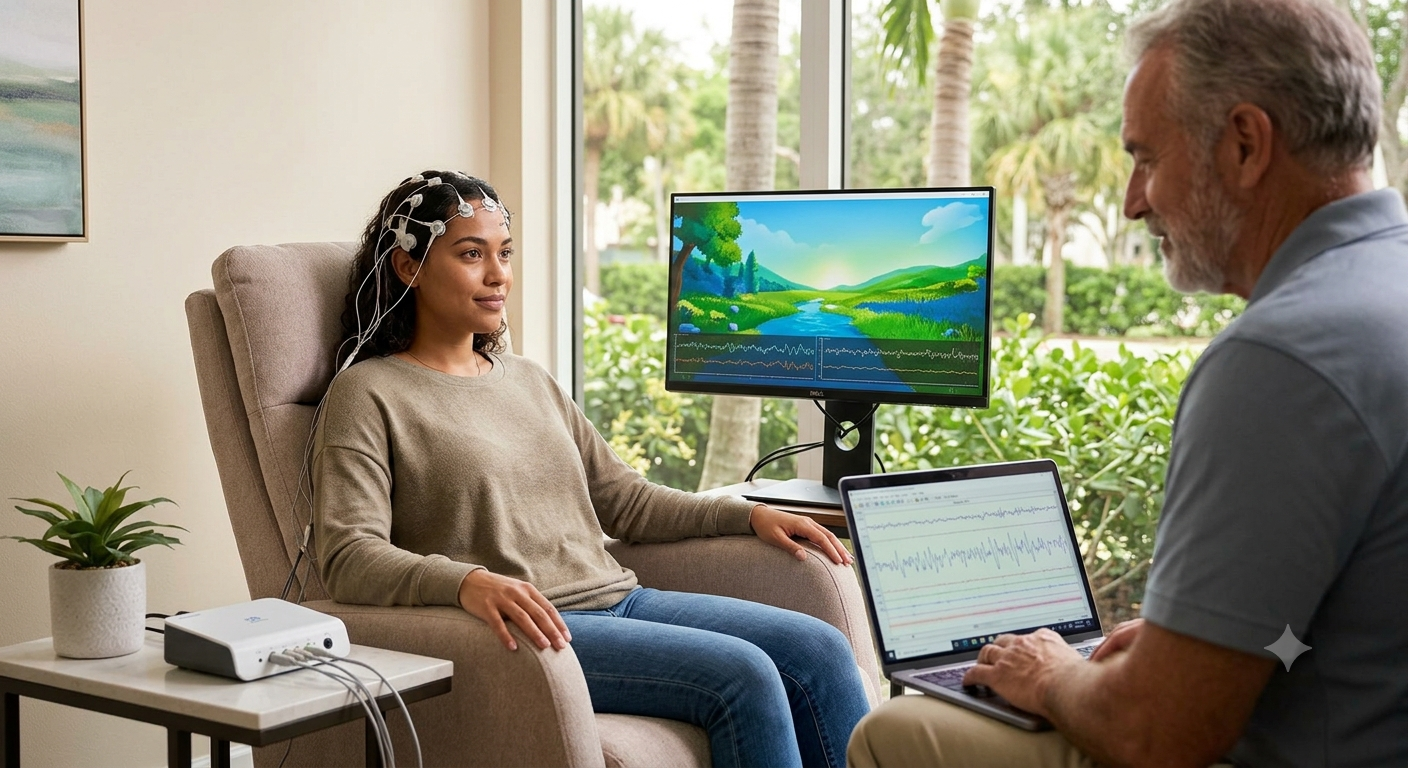
Neurofeedback is a form of EEG biofeedback that monitors brainwave activity in real time. During neurofeedback therapy Miami sessions, sensors are placed on the scalp to measure electrical activity. The information is then translated into feedback, such as visual or auditory signals.
The goal is not to force the brain to change. Instead, the feedback gives the brain an opportunity to recognize patterns in its own activity and gradually practice more efficient self-regulation.
Think of it as training rather than a quick fix. Just as repeated physical exercise can help build strength and coordination, repeated neurofeedback sessions are designed to help the brain practice healthier patterns over time.
For people researching neurofeedback therapy in Miami, this personalized approach is important because every brain is different. Attention, stress, sleep, mood, and individual goals can all influence how a program is designed.
How Does Neurofeedback Therapy Work?
The process begins by understanding what you are experiencing and what you want to improve. At Lumina Brain Center, an initial consultation helps identify your goals and determine whether neurofeedback may be appropriate.
A qEEG brain mapping assessment may also be used to measure brainwave activity and identify patterns that can help guide a personalized training plan.
Once your plan is established, neurofeedback sessions provide real-time feedback while you engage with a movie, sound, or computer-based activity. When your brain produces the activity the training is designed to encourage, the feedback responds.
With repetition, the brain gets more opportunities to practice self-regulation. This is one reason neurofeedback therapy Miami is different from a one-size-fits-all approach. Training can be adjusted around the individual's needs rather than assuming everyone should receive the same protocol.
What Happens During a Neurofeedback Session?
A typical session is designed to be comfortable and non-invasive.
You will generally sit in a comfortable setting while sensors monitor your brain activity. Depending on the training approach, you may watch a movie or interact with another form of computer-based feedback.
The system continuously monitors brainwave activity and provides feedback in real time. You do not need to consciously control every brainwave.
The Role of qEEG Brain Mapping:
qEEG, or quantitative EEG, records electrical brain activity and can provide information about brainwave patterns. At Lumina Brain Center, qEEG brain mapping is used to help create an individualized approach based on brain activity and personal goals.
For someone considering neurofeedback therapy Miami, this assessment can help move the conversation beyond general symptoms and toward a more personalized training plan.
What Can Neurofeedback Therapy Help Support?
People explore neurofeedback for many different reasons. Lumina Brain Center works with individuals seeking support for attention, anxiety and stress, sleep, mood regulation, and peak brain performance.
Focus and Attention:
Difficulty concentrating can make school, work, and everyday responsibilities more challenging. Neurofeedback training may be used to support attention, concentration, and self-regulation.
Anxiety and Stress:
When the brain and nervous system remain in a heightened state of alertness, relaxing can be difficult. Neurofeedback may help individuals practice patterns associated with calmer regulation and improved resilience.
Sleep and Relaxation:
Sleep depends on the brain's ability to shift between different states of activity. Neurofeedback may be incorporated into a broader approach for people who struggle with relaxation or sleep patterns.
Mood and Emotional Regulation:
Emotional regulation involves the ability to respond to stress and emotions without becoming overwhelmed. Brain training may support healthier self-regulation patterns.
Cognitive and Peak Performance:
Neurofeedback is not only for people experiencing challenges. Students, professionals, athletes, and others interested in optimizing focus and mental performance may also explore brain training.
What Are the Potential Benefits of Neurofeedback?
Potential benefits vary by individual. People may pursue neurofeedback to support:
Better focus and concentration
Improved relaxation and stress regulation
Healthier sleep patterns
Emotional balance
Mental clarity
Cognitive performance
Greater awareness of self-regulation
Neurofeedback therapy Miami should be viewed as a personalized training process rather than a guaranteed solution. Individual experiences and results can differ.
How Many Neurofeedback Sessions Are Needed?
There is no single number of sessions that works for everyone. The appropriate length of a program depends on individual goals, assessment, response to training, and the overall plan.
Because neurofeedback is a learning process, regular sessions are generally an important part of training.
If you are considering neurofeedback therapy Miami, a consultation can help you understand what an individualized program may look like for your situation.
Is Neurofeedback Therapy Right for You?
Neurofeedback may be worth exploring if you are interested in a non-invasive form of brain training and want a personalized approach to focus, stress regulation, sleep, mood, or performance.
It can also be considered by parents exploring brain-training options for children and teens, as well as adults interested in training their brain.
A consultation can help you discuss your goals, understand the process, and determine whether neurofeedback is appropriate for you.
Why Choose Lumina Brain Center for Neurofeedback Therapy in Miami?
Lumina Brain Center provides personalized brain training for children, teens, and adults throughout Miami and nearby communities, including Coral Gables and South Miami.
The process begins with understanding your goals, followed when appropriate by qEEG brain mapping, a personalized training plan, and ongoing neurofeedback sessions. This approach allows training to be guided by individual brain activity rather than a generic program.
If you are searching for neurofeedback therapy Miami, choosing a center that emphasizes individualized assessment and progress tracking can make the process easier to understand and more aligned with your needs.
Final Thoughts:
Your brain plays a role in how you focus, respond to stress, sleep, regulate emotions, and perform throughout the day. Neurofeedback offers a way to train brain activity through real-time feedback and repeated practice.
For people considering neurofeedback therapy Miami, the most important step is understanding that the process is personalized. Your goals, brain activity, and response to training can all help shape the approach.
Lumina Brain Center offers consultations for people interested in learning whether neurofeedback therapy Miami may be a good next step. If you are ready to better understand your brain and explore a non-invasive training approach, schedule a consultation with Lumina Brain Center today.